How to Use the PPM Dilution Formula C1V1 = C2V2
A practical guide to C1V1 = C2V2 for PPM dilutions, including stock volume, final volume, tenfold dilutions, and serial dilution.
In this guide: formulas, practical examples, important assumptions, and clear steps you can use before checking your result with a calculator.
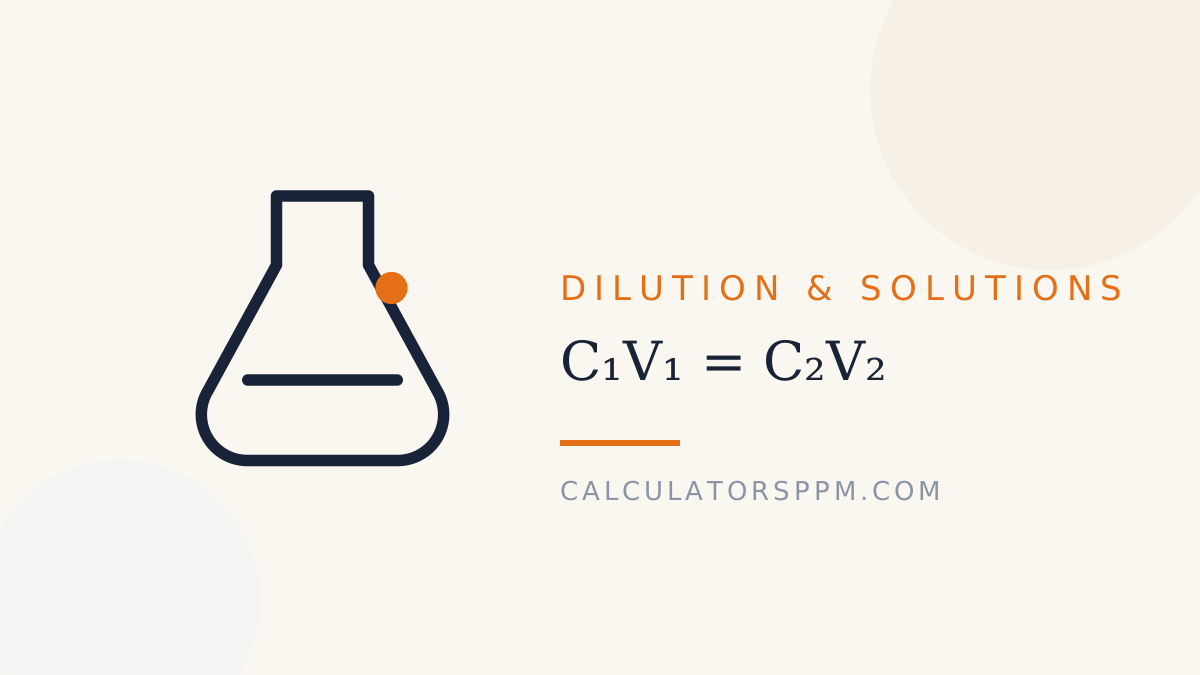
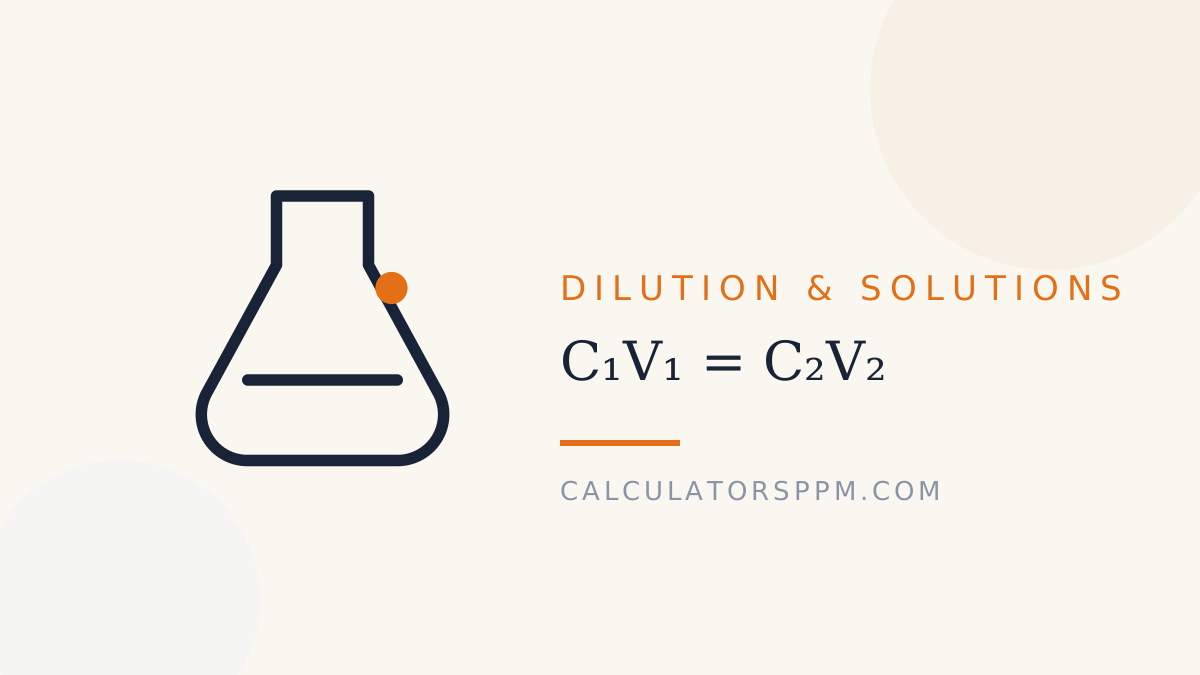
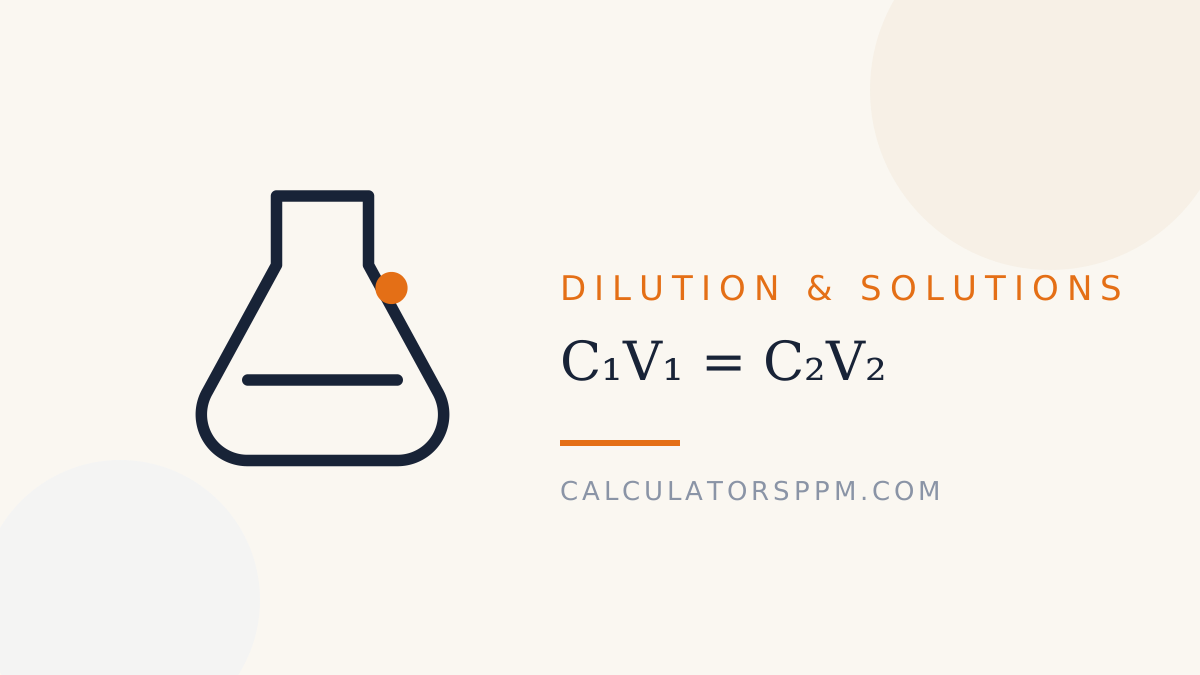
For a simple dilution where the concentration basis stays compatible, the standard relationship is:
C₁ is the starting or stock concentration, V₁ is the volume of stock used, C₂ is the target concentration, and V₂ is the final total volume.
Calculate the stock volume
If the stock concentration, target concentration, and final volume are known:
For example, suppose you have a 1,000 PPM stock and want 100 mL of a 50 PPM solution.
Measure 5 mL of the stock and bring the solution to a final volume of 100 mL with the appropriate diluent. The calculation assumes the PPM basis is compatible between the stock and final solution.
Why final volume matters
V₂ is the final volume of the diluted solution. It is not simply the amount of solvent added. If 5 mL of stock is brought to a final volume of 100 mL, the final volume is 100 mL.
Tenfold and other simple dilutions
A tenfold dilution reduces concentration by a factor of 10. A 1,000 PPM stock therefore becomes 100 PPM after a tenfold dilution. A hundredfold dilution would reduce it to 10 PPM.
The same idea can be expressed as a dilution factor:
For 1,000 PPM to 10 PPM, the dilution factor is 100.
Serial dilution
When the target concentration is much lower than the available stock, several smaller dilution steps may be easier to measure accurately. Each step has its own concentration and volume. The overall dilution factor is the product of the individual step factors.
For example, two tenfold dilutions produce a 100-fold overall dilution. Starting at 1,000 PPM, the first step gives 100 PPM and the second gives 10 PPM.
What can make C1V1 = C2V2 inappropriate?
The equation assumes that the concentration quantities are defined on a compatible basis and that the dilution process does not introduce a relevant change that the simple relationship ignores. Problems can arise if density, composition, temperature, reaction, evaporation, or a change in concentration basis matters to the method.
Do not use the equation to convert arbitrary mass-based PPM into volume-based concentration without the physical information needed to connect them.
Preparation checklist
- Confirm the stock concentration and its basis.
- Confirm the target concentration uses the same basis.
- Choose a practical final volume.
- Calculate V₁ before measuring.
- Use appropriate volumetric equipment for the required precision.
- Bring the solution to the final volume, then mix thoroughly.
- Record the stock, target, volume, and dilution steps.
For the arithmetic, use the PPM Dilution Calculator. For repeated dilution steps, see Serial Dilution and Dilution Factor.
Frequently asked questions
What is the PPM dilution formula?
The standard dilution relationship is C1V1 = C2V2, where concentration and volume are matched consistently between the stock and final solution.
What does C1 mean in a dilution calculation?
C1 is the starting or stock concentration before dilution.
What does V1 mean?
V1 is the volume of stock solution used in the dilution.
What does C2 mean?
C2 is the target or final concentration after dilution.
What does V2 mean?
V2 is the final total volume of the diluted solution, not simply the volume of solvent added.
Can PPM be used in C1V1 = C2V2?
Yes, provided C1 and C2 use the same compatible PPM basis and the dilution assumptions are appropriate.
How do I calculate the stock volume needed?
Rearrange the equation to V1 = (C2 × V2) ÷ C1.
What is a tenfold dilution?
A tenfold dilution reduces the concentration to one tenth of the starting concentration, such as 1,000 PPM to 100 PPM.
Can I use the dilution formula for serial dilutions?
Yes. Apply the relationship to each step and track the concentration and final volume at every stage.
What should I check before preparing a PPM dilution?
Check the stock concentration, target concentration, units, final volume, measurement accuracy, and whether the solution is completely mixed at each step.
How do I dilute 1000 PPM to 100 PPM?
For a compatible stock dilution, C1V1 = C2V2. The required stock volume is one tenth of the final volume.
What is the dilution factor?
It is the ratio describing how much the original concentration is reduced. For 1000 PPM to 100 PPM, the dilution factor is 10.
Use a PPM calculator
Apply the method from this guide with a dedicated calculator.
PPM Dilution Calculator
Calculate target concentrations and volumes using C1V1 = C2V2.
Open →CalculatorPPM Solution Calculator
Calculate solute mass needed to prepare a specific PPM solution.
Open →CalculatorSerial Dilution Calculator
Calculate step-by-step concentration decay across serial dilutions.
Open →